St. Francis of Assisi Weekly Reflections
The Final Judgment
11/22/2026 | Question of the WeekReading I: Parable of the Shepherds - Ezekiel 34:11-12, 15-17
Reading II: Christ, the First Fruits - 1 Corinthians 15:20-26, 28
Gospel: The Last Judgment - Matthew 25:31-46
Key Passage: [The Son of Man] will answer them, "Truly I tell you, just as you did not do it to one of the least of these, you did not do it to me." (Matthew 25:45)
Adults: Who are the least of your sisters and brothers for whom you do care? Who are those whom you ignore?
Kids: To which person did you especially try to show the love and care of Jesus?
El juicio final
Lectura I: Parábola de los pastores - Ezequiel 34, 11-12, 15-17
Lectura II: Cristo, primicia de los que han muerto - 1 Corintios 15, 20-26, 28
Evangelio: El juicio final - Mateo 25, 31-46
Pasaje clave: [El Hijo del Hombre] les responderá: "Yo les aseguro que, cuando no lo hicieron con uno de aquellos más insignificantes, tampoco lo hicieron conmigo". (Mateo 25:45)
Adultos: ¿Quiénes son los más pequeños de tus hermanos y hermanas a quienes cuidas? ¿A quiénes ignoras?
Niños: ¿A qué persona intentaste mostrar, de manera especial, el amor y el cuidado de Jesús?
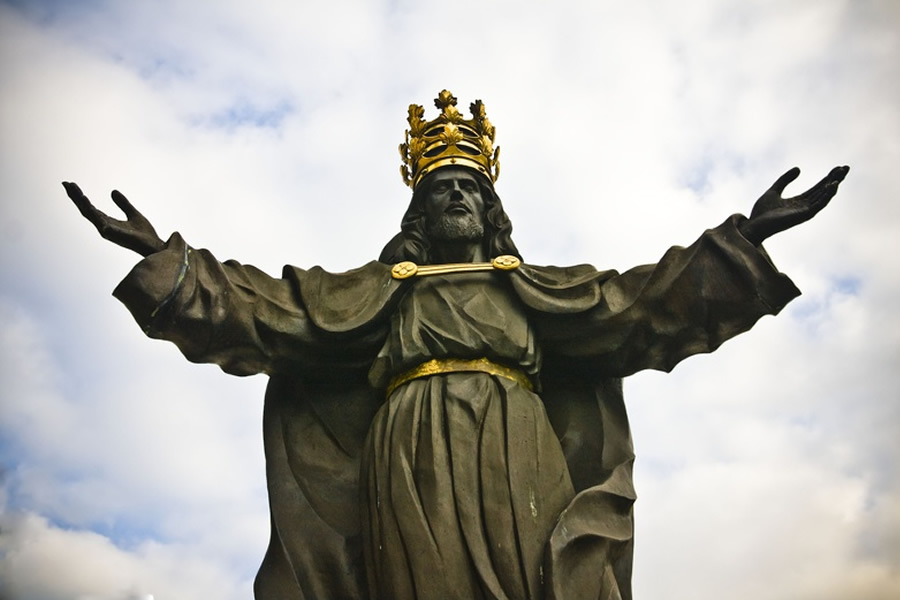
Solemnity of Christ the King
by We Celebrate Worship Resource, Vol. 51, No. 2 | 11/22/2026 | Weekly ReflectionIn describing the last judgment, Jesus tells his disciples that we will be judged by what we did or failed to do for the least of those among us, for "whatever you did for one of the least brothers [or sisters] of mine, you did for me" (Matthew 25:40). It can be quite the challenge to see the face of Christ in these least among us: the homeless person in threadbare clothing begging for money for food or drink, poor people in nursing homes with physical or mental illnesses, undocumented immigrants looking for work and speaking no English, prisoners serving life sentences. It might help to imagine Jesus nailed to the cross; hungry, thirsty, stripped of his clothes, bloodied and bruised from torture. Looking at Christ crucified is not easy either. We are challenged to look into the eyes of those whom society would rather overlook, see their needs, and minister to them as if they were the Lord. For it is not only in them that we see that face of Christ, it is through ministering to them that we inherit the kingdom of God.
What will you do at Thanksgiving or during Advent to serve those in need?
Solemnidad de Cristo Rey
Al describir el juicio final, Jesús les dice a sus discípulos que seremos juzgados por lo que hicimos, o dejamos de hacer, por los más pequeños entre nosotros; pues "todo lo que hicieron por uno de estos mis hermanos [o hermanas] más pequeños, lo hicieron por mí" (Mateo 25, 40). Puede resultar todo un desafío ver el rostro de Cristo en estos "más pequeños": la persona sin hogar, con ropas raídas, que pide dinero para comer o beber; los pobres en residencias de ancianos que padecen enfermedades físicas o mentales; los inmigrantes indocumentados que buscan trabajo y no hablan el idioma; los prisioneros que cumplen cadenas perpetuas. Quizás ayude imaginar a Jesús clavado en la cruz: hambriento, sediento, despojado de sus vestiduras, ensangrentado y magullado a causa de la tortura. Tampoco es fácil contemplar a Cristo crucificado. Se nos desafía a mirar a los ojos a aquellos a quienes la sociedad preferiría ignorar, a reconocer sus necesidades y a atenderlos como si fueran el Señor mismo. Porque no solo vemos el rostro de Cristo en ellos, sino que, al servirles, es como heredamos el reino de Dios.
¿Qué harás en Acción de Gracias o durante el Adviento para servir a los necesitados?
Using Your Gifts
11/15/2026 | Question of the WeekReading I: The Ideal Wife - Proverbs 31:10-13, 19-20, 30-31
Reading II: The Need for Preparation - 1 Thessalonians 5:1-6
Gospel: Parable of the Silver Pieces - Matthew 25:14-30
Key Passage: [The servant said,] "Master, you handed over to me five talents; see, I have made five more talents." His master said to him, "Well done, good and trustworthy slave; you have been trustworthy in a few things, I will put you in charge of many things; enter into the joy of your master." (Matthew 25:20b–21)
Adults: What gift have you not developed as you had hoped? What could you still do?
Kids: What gift has God given you? What do you want to do with it?
Cómo usar tus dones
Lectura I: La Esposa Ideal - Proverbios 31:10-13, 19-20, 30-31
Lectura II: La Necesidad de Preparación - 1 Tesalonicenses 5:1-6
Evangelio: Parábola de los Talentos - Mateo 25:14-30
Pasaje clave: [El siervo dijo:] "Señor, me entregaste cinco talentos; mira, he ganado otros cinco talentos". Su señor le dijo: "¡Bien hecho, siervo bueno y fiel! Has sido fiel en lo poco; te pondré a cargo de mucho más. ¡Ven a compartir la alegría de tu señor!". (Mateo 25:20b–21)
Adultos: ¿Qué don no has desarrollado tanto como esperabas? ¿Qué podrías hacer todavía al respecto?
Niños: ¿Qué don te ha dado Dios? ¿Qué quieres hacer con él?
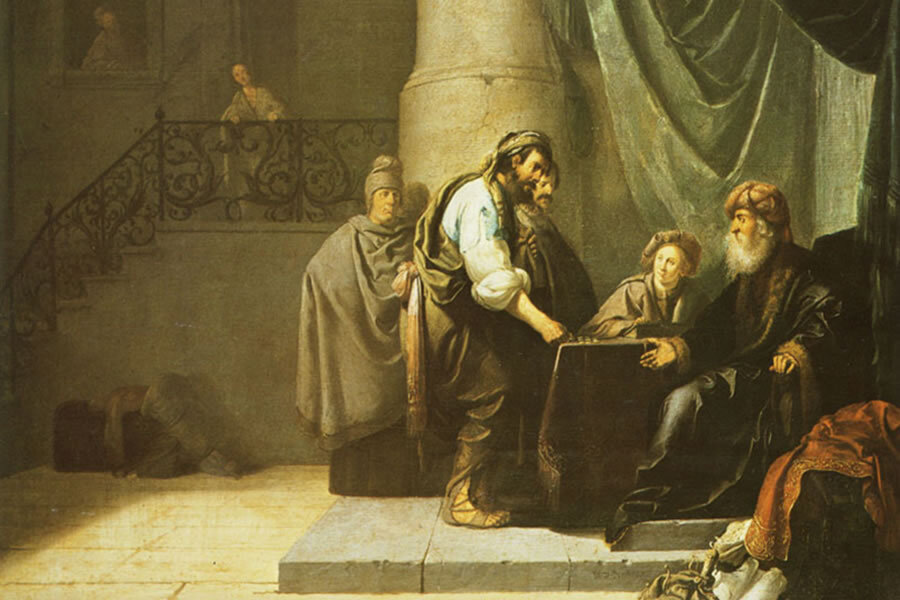
Come, Share Your Master's Joy
by We Celebrate Worship Resource, Vol. 51, No. 2 | 11/15/2026 | Weekly ReflectionIn the parable of the talents, the focus is on the servants who receive the most and the least from their master. The one who receives the most—more than twice as much as the middle servant—makes the most in return and is even rewarded with the lazy servant's single talent. The one who receives only a single talent and buries it in the ground earns nothing but the ire of the master. But let us focus on the middle servant. He is given only two talents. Evidently, he is not even half as capable as the servant who received five. He could have neglected or wasted them, resentful that he received so few. Or he could have hoarded them, fearing that he may end up with only one, like the last servant. But instead, he exercises them, doubling their value just as the servant with five had done. Though he still has fewer talents than the first servant had at the start, the master responds the same: "Well done, my good and faithful servant... Come, share your master's joy." (Matthew 25:23) We may look at others who are more talented and feel jealous or resentful, but know that God asks us to exercise only the talents we do have, no matter how many or how few, and at the end of our days we too will be greeted, "Well done, my good and faithful servant... Come share your master's joy."
How are you using your talents to help further the Lord's mission?
Entra al gozo de tu señor
En la parábola de los talentos, el foco está puesto en los siervos que reciben, respectivamente, la mayor y la menor cantidad de parte de su señor. Aquel que recibe más —más del doble de lo que recibe el siervo intermedio— logra el mayor rendimiento y, además, es recompensado con el único talento que pertenecía al siervo perezoso. Por su parte, quien recibe un solo talento y lo entierra en la tierra no obtiene nada más que la ira de su señor. Pero detengámonos en el siervo intermedio: a él se le entregan solo dos talentos. Es evidente que no posee ni la mitad de la capacidad del siervo que recibió cinco. Podría haberlos descuidado o malgastado, sintiéndose resentido por haber recibido tan poco; o bien, podría haberlos guardado por miedo a terminar con uno solo, tal como le ocurrió al último siervo. Sin embargo, él decide ponerlos a trabajar, duplicando su valor, al igual que hizo el siervo que recibió cinco. Aunque al final sigue teniendo menos talentos que los que tenía el primer siervo al comienzo, la respuesta de su señor es la misma: "¡Bien hecho, siervo bueno y fiel!... ¡Ven a compartir la alegría de tu señor!" (Mateo 25:23). A veces, al observar a otros que poseen más talentos, podemos sentir celos o resentimiento; pero debemos saber que Dios solo nos pide que pongamos en práctica los talentos que realmente tenemos, sin importar cuántos sean, y al final de nuestros días, también nosotros recibiremos estas palabras: "¡Bien hecho, siervo bueno y fiel!... ¡Ven a compartir la alegría de tu señor!".
¿Cómo estás utilizando tus talentos para contribuir a la misión del Señor?

Therefore, Stay Awake!
by We Celebrate Worship Resource, Vol. 51, No. 2 | 11/08/2026 | Weekly ReflectionIn today's first reading, we are urged to await the arrival of wisdom, personified as a woman who will come to those who watch for her. Saint Paul writes that those who have died await the coming of the Lord. In the Gospel, ten bridesmaids await the arrival of the bridegroom, who is long delayed and arrives after midnight. Half are unprepared, however, and end up locked out. Jesus tells his disciples that this is not just any wedding feast, but the kingdom of heaven, which may arrive at any time. Are we ready? If the Lord returns tonight, or if our life ends today, are we ready to greet him, the font of wisdom, the one who marries heaven and earth, joining all those who have died in the light of Christ? As we approach the end of Matthew's Gospel and the end of the Church year, let us recall what we heard near the beginning of both, from John the Baptist: "Repent, for the kingdom of heaven is at hand!... Produce good fruit as evidence of your repentance" (Matthew 3:2, 8). May we repent and produce good fruit, which, like the wise bridesmaids' oil, will prepare us for the heavenly feast.
How will you produce good fruit that will not run low?
¡Estén, pues, preparados!
En la primera lectura de hoy, se nos exhorta a aguardar la llegada de la sabiduría, personificada como una mujer que acudirá a quienes la esperan. San Pablo escribe que los que han muerto aguardan la venida del Señor. En el Evangelio, diez jóvenes esperan la llegada del esposo, quien tarda en aparecer y llega pasada la medianoche. Sin embargo, la mitad de ellas no están preparadas y terminan quedándose fuera. Jesús dice a sus discípulos que no se trata de un banquete de bodas cualquiera, sino del reino de los cielos, el cual puede llegar en cualquier momento. ¿Estamos preparados? Si el Señor regresara esta noche, o si nuestra vida terminara hoy, ¿estaríamos listos para recibirlo a Él, fuente de la sabiduría, Aquel que une el cielo y la tierra, congregando a todos los que han fallecido en la luz de Cristo? Al acercarnos al final del Evangelio de Mateo y al cierre del año litúrgico, recordemos lo que escuchamos casi al comienzo de ambos, de labios de Juan el Bautista: "¡Arrepiéntanse, porque el reino de los cielos está cerca!... Produzcan buenos frutos como prueba de su arrepentimiento" (Mateo 3,2.8). Ojalá nos arrepintamos y demos buenos frutos; estos, al igual que el aceite de las jóvenes prudentes, nos prepararán para el banquete celestial.
¿Cómo producirás buenos frutos que no se agoten?
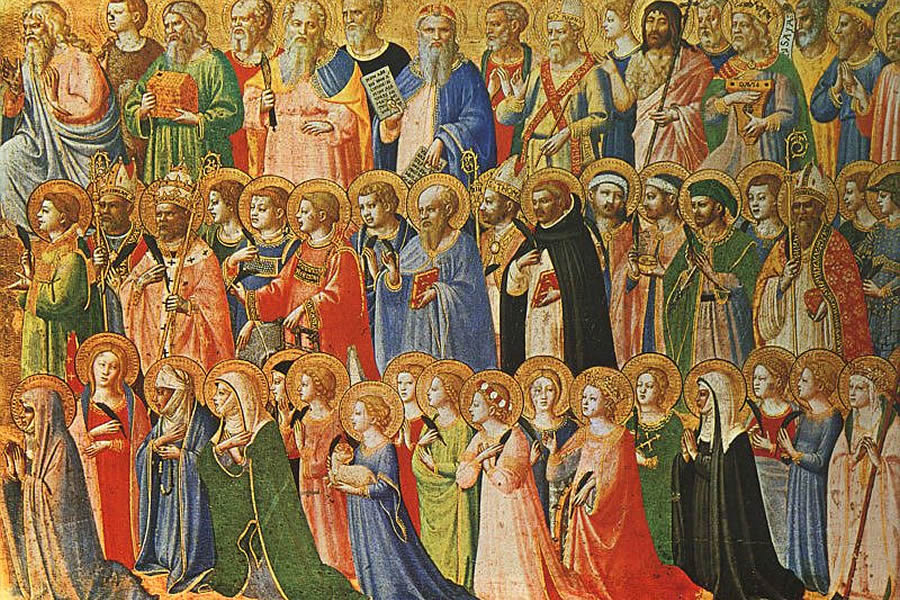
Solemnity of All Saints
by We Celebrate Worship Resource, Vol. 51, No. 2 | 11/01/2026 | Weekly ReflectionSaints possess a couple of special qualities that the rest of us could do to emulate. The first is an ability to see through God's eyes. Saints do not see the world and everyone in it as the world does; they see them as the Creator of the world does. They look at people who are poor in spirit, or poor in material wealth, and glimpse the kingdom of heaven. They look at those who are meek, whom the world sees as weak or lazy, and see those who receive the promise of a new heaven and a new earth. They look at those denied justice and see them receiving God's ultimate justice. The second quality saints have is the tenacity to build the kingdom here and now in whatever way they can. They work tirelessly to bring the beatitudes to fruition. They dedicate their lives to ministering to the poor, to comforting the mourning, to working for righteousness, to showing mercy, and to making peace – despite any fear of rejection or persecution. Every All Saints Day we hear the Beatitudes, reminding us what is truly blessed. May they guide us on the road to the kingdom.
When do you fail to see blessing as God sees them? Which beatitude can you work to bring to fruition this month?
Solemnidad de Todos los Santos
Los santos poseen un par de cualidades especiales que al resto de nosotros nos vendría bien imitar. La primera es la capacidad de ver a través de los ojos de Dios. Los santos no ven el mundo ni a las personas que habitan en él tal como los ve el mundo; los ven tal como los ve el Creador del mundo. Contemplan a quienes son pobres de espíritu o carecen de bienes materiales, y vislumbran en ellos el reino de los cielos. Observan a los mansos, a quienes el mundo considera débiles o perezosos, y ven en ellos a quienes reciben la promesa de un cielo nuevo y una tierra nueva. Miran a aquellos a quienes se les niega la justicia y los ven recibiendo la justicia definitiva de Dios. La segunda cualidad de los santos es la tenacidad para construir el reino aquí y ahora, de cualquier manera que les sea posible. Trabajan incansablemente para hacer realidad las bienaventuranzas. Dedican sus vidas a atender a los pobres, consolar a los que sufren, trabajar por la justicia, mostrar misericordia y construir la paz, sin importar el temor al rechazo o a la persecución. Cada Día de Todos los Santos escuchamos las bienaventuranzas, que nos recuerdan en qué consiste la verdadera dicha. Que ellas nos guíen en el camino hacia el reino.
¿Cuándo dejas de ver las bendiciones tal como Dios las ve? ¿En qué bienaventuranza puedes trabajar para hacerla realidad este mes?
All Saints
11/01/2026 | Question of the WeekReading I: Rejoicing of the Elect - Revelation 7:2-4, 9-14
Reading II: Children of God - 1 John 3:1-3
Gospel: The Beatitudes - Matthew 5:1-12a
Key Passage: See what love the Father has bestowed on us that we may be called the children of God. (1 John 3:1)
Adults: What qualities do you see in yourself that mark you as a child of God?
Kids: What is good about being a child of God?
Todos los Santos
Lectura I: El regocijo de los elegidos - Apocalipsis 7, 2-4, 9-14
Lectura II: Hijos de Dios - 1 Juan 3, 1-3
Evangelio: Las Bienaventuranzas - Mateo 5, 1-12a
Pasaje clave: ¡Miren cuánto amor nos ha tenido el Padre, pues no solo nos llamamos hijos de Dios, sino que lo somos. (1 Juan 3, 1)
Adultos: ¿Qué cualidades ves en ti mismo que te identifican como hijo de Dios?
Niños: ¿Qué tiene de bueno ser hijo de Dios?